Can I Use Almond Flour to Make Gravy
How to make a delicious gravy and plenty of it. Office of my step-by-step guide with Gratuitous time programme for making a succulent roast dinner. 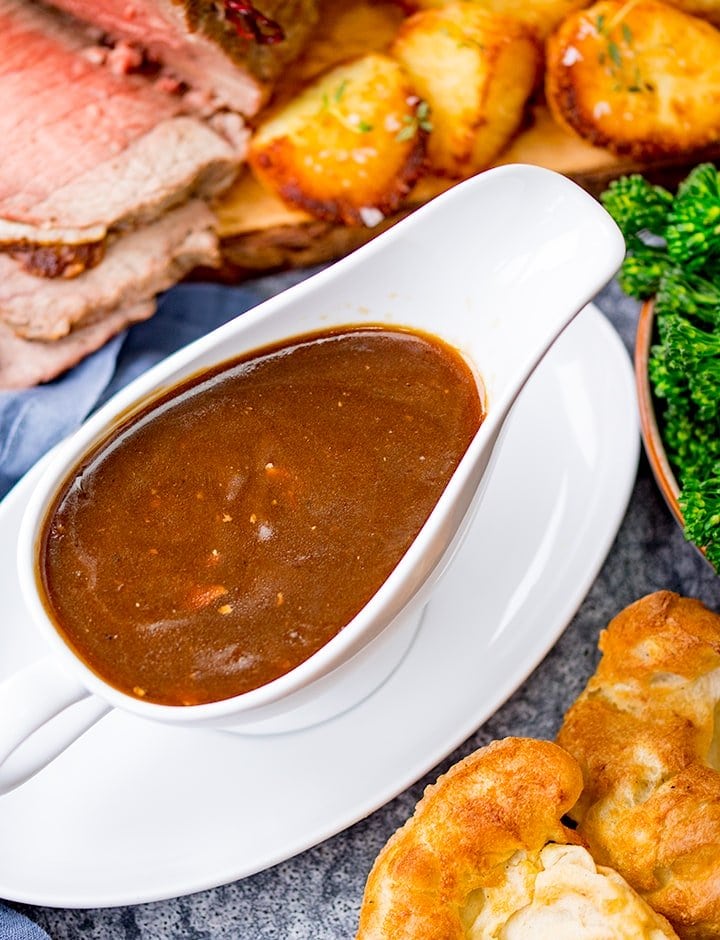
I kind of get the whole 'au jus' matter - a little trickle of compact, flavourful sauce on your slices of meat, whilst leaving the potatoes and vegetables blank, so they look vibrant and colourful.
Merely I don't desire a picayune drizzle of au jus. I want gravy. And loads of it!
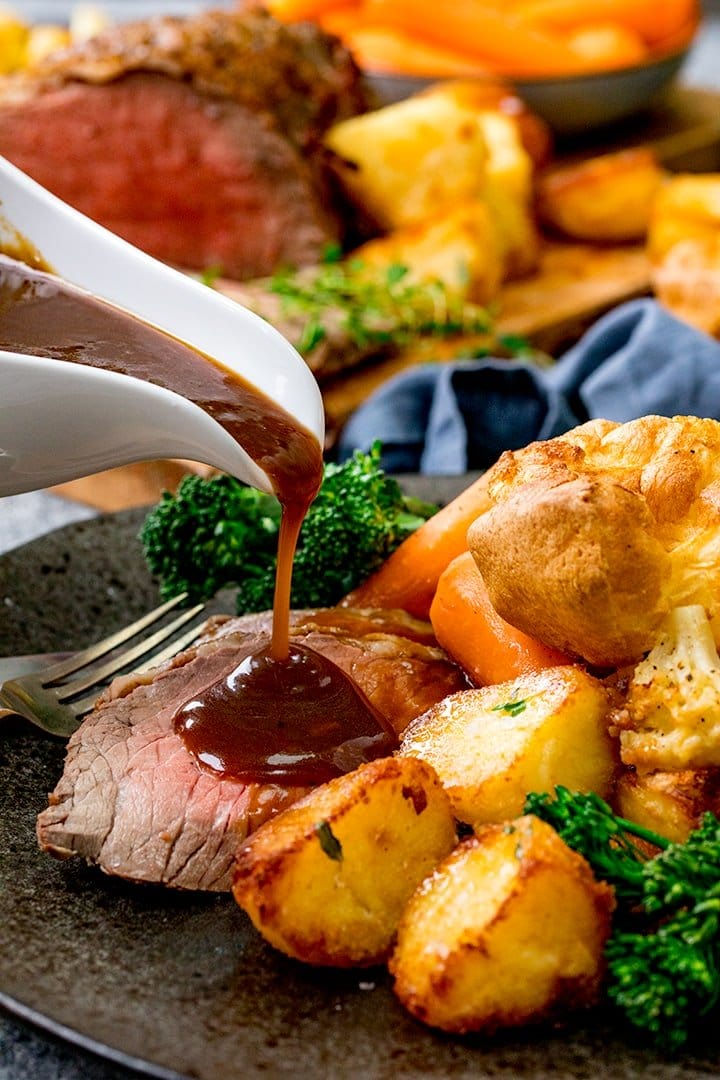
I want it all over my roast beef, roast potatoes and veggies. I desire an extra pool of it on my plate for dipping purposes, and I desire my yorkshire pudding filled with it, so you lot get the excitement of cutting your yorkshire pudding open similar a gravy river whooshing from a crispy gilded dam.
The residual of my family is the same, then when I brand a roast dinner, I have to make that gravy stretch really far. Only it has to be packed full of flavor too.
This is my comprehensive guide for making a big batch of gravy from the meat juices of your roasted meat.
Which meat makes the all-time gravy?
Chicken
Good quality chicken tin produce succulent gravy. Go with a larger chicken (we all want roast craven leftovers right?), preferably free-range organic. This is considering they're usually fed a better diet and move around more, which produces a more tender meat.
Castor all over with olive oil and flavor with plenty of common salt and pepper before roasting.
Lamb
Lamb leg or shoulder is my favourite meat for a roast dinner. Information technology'southward a naturally fattier meat, with lots of season that makes tasty gravy. I love to add a teaspoon of mint sauce to my lamb gravy.
Once more, castor all over with olive oil and flavor with plenty of common salt and pepper before roasting.
Pork
Whilst I love roast pork with crackling, I recall information technology's the about hard to get a good flavour from. The layer of fatty and skin ensure a pork joint will be lovely and juicy, but the meat juices don't have much depth to them.
I always add a mixture of beef and chicken stock (from a crumbled stock cube or liquid stock) to pork meat juices to increase the flavor. Using both results in a squeamish flavor rest for pork.
A pork crackling joint should be scored and rubbed with plenty of common salt before roasting.
Beefiness
Personally, I retrieve a practiced quality joint of beefiness will requite y'all the best flavour gravy.
Look for a joint with a skilful amount of fatty on top and picayune veins of fat (not gristle) running through it. I like a ribeye joint when I'chiliad splashing out, or for a regular, less expensive cut, a adept quality beef topside or tiptop rump joint (although a little bacteria than ribeye), is good too.
Cooked in the oven with a splash of olive oil and a good sprinkling of salt and pepper, you'll get some tasty meat juices for your gravy.
I take used brisket in the past likewise, but equally this is a tougher cut of meat, it requires longer cooking. Considering it doesn't product much in the fashion of meat juices, I add a half bottle of red vino to the pan and cover the brisket before cooking low and irksome to ensure I have skilful tasting liquid for the gravy.
Vegetable trivet or not?
Some chefs like to roast their meat on elevation of a trivet of onions and carrots. The trivet tin can help to keep the base of the meat moist, and the caramelization of the veggies, once squished effectually a footling at the end of cooking, tin can add together flavour to the gravy. These veggies are then discarded.
Personally I hardly e'er use a vegetable trivet. I prefer the meat juices to baste directly into the pan, and so kickoff to caramelize on the base of the pan. It'southward these lovely darkened caramelized juices that requite the gravy the all-time flavour in my stance. I can't stand the thought of letting the vegetables soak upwardly the juices, then trying to squish that season out of the veggies before discarding them. That's flavour that'southward being thrown abroad!
The times when I would employ a vegetable trivet would exist for something like a brisket - which takes a long time to cook, and needs all the assistance with moisture it can go. I add wine into the base of the tin too, so as the meat juices are released into the veggies, they're likewise going into the wine.
I besides may use a vegetable trivet if I'm cooking a huge piece of meat - similar a large turkey. Over again, y'all're cooking the turkey for a long time, so it needs a little help with the moisture. Besides, roast turkeys produce lots of meat juices, so you won't be chucking it all abroad when you discard the vegetables.
Should I add stock cubes/stock pots/concentrated liquid stock?
100% aye! If you want lots of gravy, you're going to need some assist. The meat juices from your roasting articulation will mostly have a lovely, deep flavour, simply they won't go very far. Adding the vegetable h2o from steaming/humid your vegetables, as well as a couple of crumbled up stock cubes will brand the gravy stretch much further, whilst still ensuring the flavour from the meat juices shines through.
I personally similar chicken or beef oxo cubes (I use i per cup/240ml h2o) or fifty-fifty better if i take some homemade stock in the freezer.
If i'g making a gluten free version, I apply Essential Cuisine full-bodied liquid stock/glace or powder. Information technology's more than expensive than Oxo cubes, but has a fantastic flavour (fyi - I've worked with them in the past, but I'thou not being paid for this mention in any fashion). I retrieve it's merely available in the UK, online or in larger farm shops. If you're in the The states and you know of a fantastic gluten free stock cube/powder/liquid, permit me know in the comments and I'll add together it into this postal service.
Cornflour/cornstarch method or the roux method?
I'chiliad probably going to daze you at present, only I adopt the cornflour/cornstarch method.
The roux method (which involves sprinkling flour into the meat juices, stirring with a whisk to form a paste, then slowly adding liquid) is more than traditional, just has a higher likelihood of going wrong - producing a gravy with a floury taste if the flour isn't cooked out enough, or lumpy gravy if you're not really careful whilst adding the stock. Some people believe the roux method is more flavourful, but I don't call back at that place'southward a difference in flavour.
Using the cornflour/cornstarch method means you can add all liquid in first (so you can ensure you lot have the right quantity of gravy), then add the cornstarch slurry to thicken. Information technology too produces a shiner gravy that's gluten free (providing you utilise gluten complimentary stock)
I'll include instructions for both methods in the recipe card below.
Using bones for gravy (brilliant for make ahead gravy)
Is it gross that I have bag total of bones in my freezer?
Whenever we have a roast - chicken, lamb, beef - basically anything roasted on the bone, I always save the bones. Place them in a bag, and keep adding to that bag. Once you have a couple of craven carcasses or a few bones, add them all into a large stock pot (mix them up - lamb bones, beefiness basic, chicken carcass - they can all go in together) with a a couple of roughly chopped onions (no need to pare), a couple of broken up carrots (no need to peel), a stick of celery and ½ tsp each of salt and pepper. Cover with water - then it well-nigh reaches the peak of the pan, then bring to the boil. Simmer for 3-four hours until the liquid has reduced by three-quarters. Get out to cool a little, and strain the liquid into a bowl. Give the basic and veggies a expert squeeze with a spoon to get all the liquid out.
Absurd and freeze this stock for after or use right away. It makes a fantastic base for soup, or you tin can heat it and stir through some cornstarch slurry (2 tbsp cornflour/cornstarch with 5 tbsp cold water) until thickened. Add together in a splash of gravy browning if y'all like a darker gravy. Add in a crumbled stock cube if you want even more flavour.
Making gravy when y'all oasis't got any meat juices (i.e for sausages)
So you want to make toad in the hole or chips and gravy - without resorting to bisto and h2o (sad bisto).
You've got a few options:
- Brand some gravy from that delicious stock you made and froze earlier after boiling upward all of those basic (see in a higher place).
- Make an onion-based gravy with caramelized onions. Fry a finely sliced onion, along with 1 tsp light brown sugar and 2 tbsp of unsalted butter over a low heat for 15-xx minutes, until starting to caramelize. Sprinkle over 2 tbsp flour and stir. Cook for 2 minutes to cook out the taste of the flour. Add in 2 cups (420ml) of hot beef stock (h2o plus two stock cubes), slowly, whilst stirring all the time, until the gravy thickens. You'll see I'm using the roux method for this, simply it's less likely to go incorrect in this case, every bit the flour adheres to the onions initially, which helps to prevent a lumpy gravy. Add a splash of Worcestershire sauce and season with common salt and pepper before serving.
- Add water to a pan with a mixture of stock cubes (chicken and beef, lamb also if you have information technology). This mixture gives a prissy balance of flavours. Use one stock cube for every cup (240ml) of water. Or apply concentrated liquid stock (once more, i'd recommend a mixture of the Essential cuisine liquid stocks/glaces). Bring to the eddy, and so stir in a cornstarch slurry (2 parts cornflour/cornstarch mixed with 5 parts common cold h2o) using a whisk until thickened. Season with salt and pepper.
The gravy:
(fyi - i've included instructions for the roux method in the recipe bill of fare below as well).
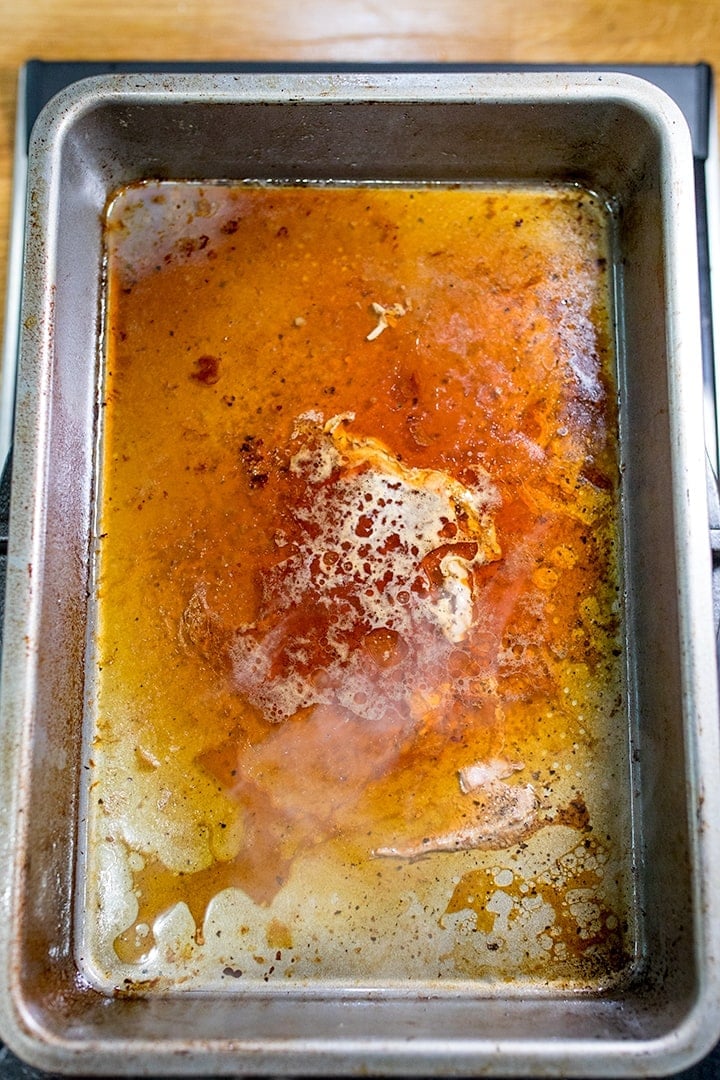
Estrus the meat juices in the roasting tin can (ensure your roasting can can take direct estrus):
Sprinkle on a couple of crumbled stock cubes or add in a couple of teaspoons of full-bodied liquid stock:

Stir together whilst pouring in the vegetables water from humid steaming your vegetables and potatoes. Bring to the boil and lightly season with salt and pepper.
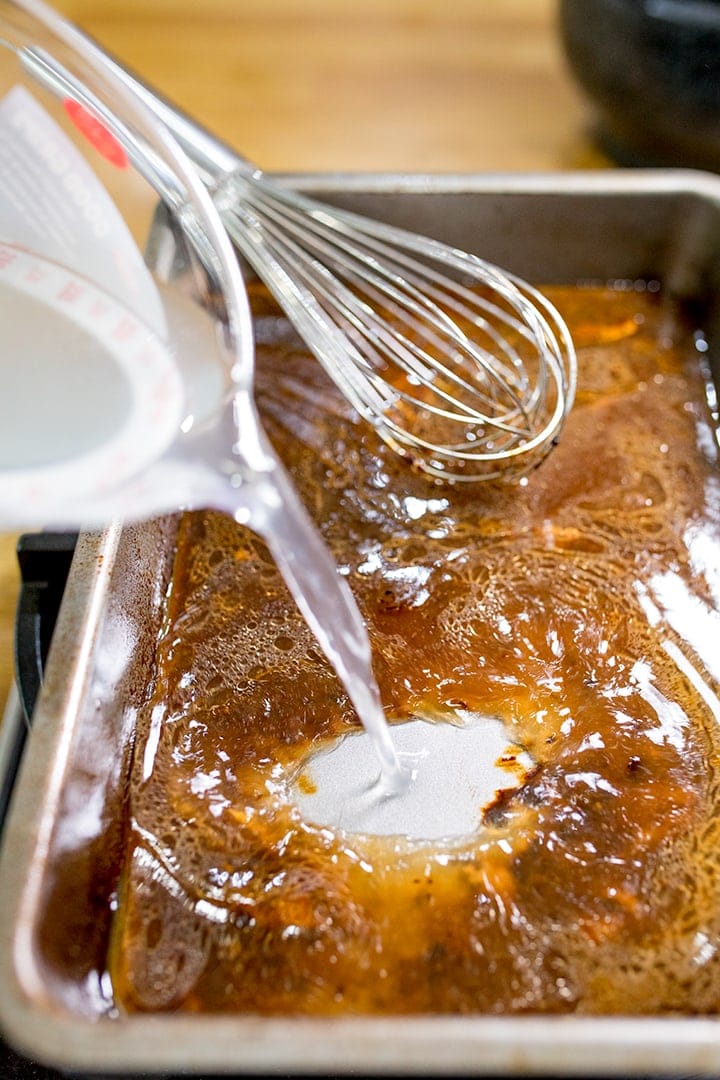
Stir in a simple cornstarch slurry (two parts conrflour/cornstarch mixed with 5 parts cold water) using a whisk, until thickened.
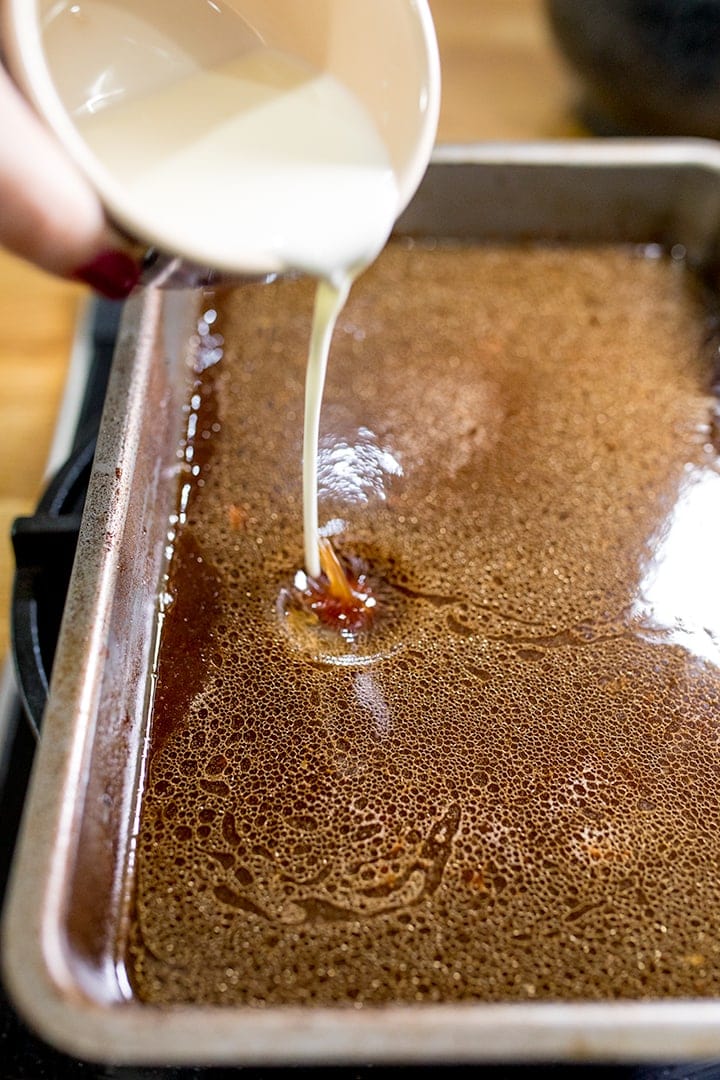
Permit to bubble. Add any meat juices from the rested meat. Check for seasoning and add a piddling more than salt and pepper if needed.
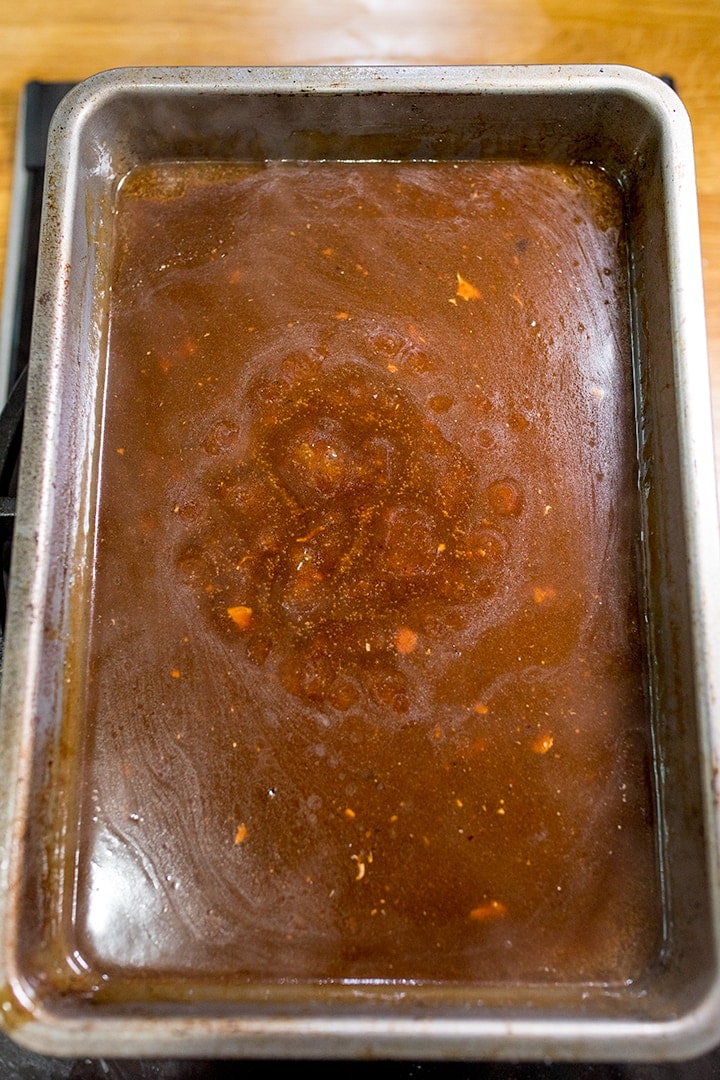
Serve immediately. Or turn off the rut until the rest of your roast dinner is fix and reheat merely before serving. If you're short on hob space, cascade into a microwaveable jug and reheat in the microwave right before serving.
This gravy is part of my 'How to make a Roast Beef Dinner step-by-step timeplan' mail service. Bank check it out for like shooting fish in a barrel to follow instructions on making a mouthwatering roast beef dinner!
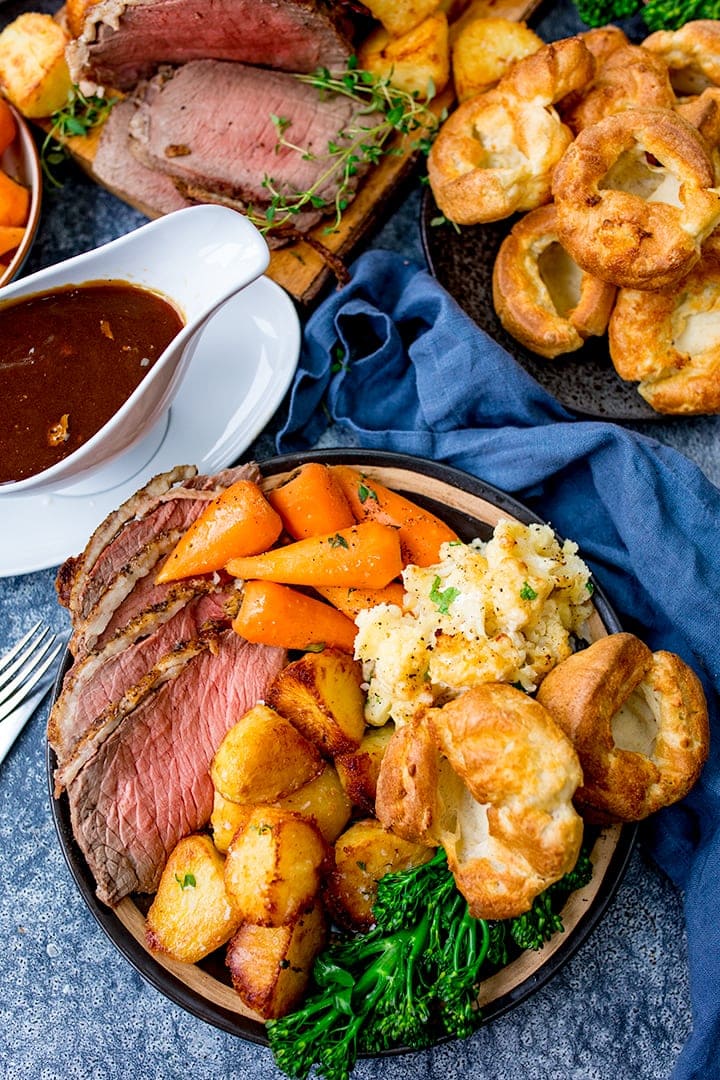
How to make Gravy:
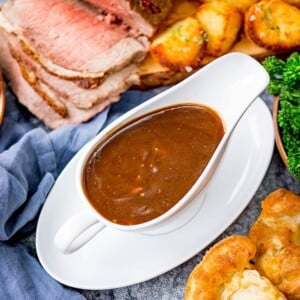
How to make gravy
How to make a delicious beefiness gravy and plenty of it. Function of my footstep-by-step guide with FREE time plan for making a delicious roast beef dinner.
- Meat juices from your roasted meat
- 2-iii crumbled stock cubes - chicken, beef or lamb, depending on which meat you lot've cooked, or a mixture of chicken and beef for gravy for roast pork or 3 tsp full-bodied liquid stock
- iii cups (720ml) hot vegetable stock - from your boiled/steamed vegetables and potatoes
- ¼ tsp salt
- ¼ tsp blackness pepper
- two tbsp cornflour/cornstarch
- 5 tbsp cold water
- ¼ tsp gravy browning - optional
-
Oestrus the meat juices in the roasting tin (ensure your roasting tin tin have directly heat).
-
Sprinkle on the crumbled stock cubes (or add the liquid stock).
-
Stir together whilst pouring in the hot vegetable h2o. Bring to the boil and lightly season with table salt and pepper.
-
Stir in a the cornstarch slurry using a whisk, until the gravy thickens.
-
Let to bubble. Add whatever meat juices from the rested meat. Bank check for seasoning and add a lilliputian more salt and pepper if needed.
-
If y'all desire the gravy to be a darker brown, stir in the gravy browning.
-
Serve immediately. Or plough off the heat until the rest of your roast dinner is set and reheat but before serving. If you're curt on hob space, pour into a microwaveable jug and reheat in the microwave correct earlier serving.
Roux method:
Ingredients:
- Meat juices from your roasted meat
- 2 tbsp manifestly (all purpose) flour
- 2-3 crumbled stock cubes (chicken, beef or lamb, depending on which meat you've cooked, or a mixture of chicken and beefiness for gravy for roast pork) or three tsp concentrated liquid stock
- iii cups (720ml) hot vegetable stock - from your boiled/steamed vegetables and potatoes
- ¼ tsp salt
- ¼ tsp black pepper
- ¼ tsp gravy browning (optional)
Instructions:
- Rut the meat juices in the roasting tin (ensure your roasting can tin take straight heat).
- Sprinkle on the flour and mix together with a whisk to grade a thick paste.
- In a jug, mix together the crumbled stock cubes and hot vegetable stock. Slowly cascade this stock into the roux whilst stirring all the time with a whisk.
- If you have any further meat juices from the rest meat, pour them in at present.
- Bring to the boil, and slowly stir with the whisk until thickened.
Season with with salt and pepper.
If you desire the gravy to be a darker brown, stir in the gravy browning.
Serve immediately. Or turn off the heat until the balance of your roast dinner is set and reheat just before serving. If you're short on hob space, cascade into a microwaveable jug and reheat in the microwave right before serving.
Nutritional information is per serving.
Calories: 59 kcal Carbohydrates: 4 m Fatty: 4 g Sodium: 887 mg Sugar: 1 1000 Vitamin A: 250 IU
Some of the links in this mail service may be affiliate links – which means if you buy the product I get a minor commission (at no extra cost to yous). If you practise buy, and so cheers! That'south what helps u.s. to keep Kitchen Sanctuary running. The nutritional data provided is guess and can vary depending on several factors. For more information delight see our Terms & Conditions.

Source: https://www.kitchensanctuary.com/how-to-make-gravy/
0 Response to "Can I Use Almond Flour to Make Gravy"
Post a Comment